
Winter turns Vienna into a city of light and celebration. Streets like the Graben, Kärntnerstraße, and Kohlmarkt twinkle with festive decorations, and squares and places such as Rathausplatz, Karlsplatz, Spittelberg, and Schönbrunn fill with people enjoying the season. After work, locals often pause at food and punch stalls, chatting and warming up outdoors instead of heading inside. Families stroll from market to market, children laugh among festive play areas, and visitors from around the world experience the unique charm of Vienna’s Christmas markets – Christkindlmärkte.
These markets have a long history: the first was held in 1296, when Duke Albrecht I allowed a December market for citizens. These early markets served as vital commercial gatherings during the cold winter months and gradually evolved to focus more on Christmas-related goods and festivities. Today, the markets are about tradition, craftsmanship, festive food, and community.
The term “Christkindlmarkt” — literally “Christ Child Market” — comes from the Christkind, baby Jesus, the symbolic gift-bringer. The term emerged during the Reformation, emphasizing the Christkind (the Christ Child) instead of saints. This cultural shift spread across German-speaking regions, centering Christmas around the nativity.
Historic Markets
Freyung
Freyung (Altwiener Christkindlmarkt) is the city’s oldest traditional market, dating back to 1772. It is celebrated for its traditional atmosphere, stage performances, and artisanal offerings, providing a nostalgic glimpse into the past and remaining a cherished spot for locals and visitors seeking an authentic Christmas experience.
Rathausplatz
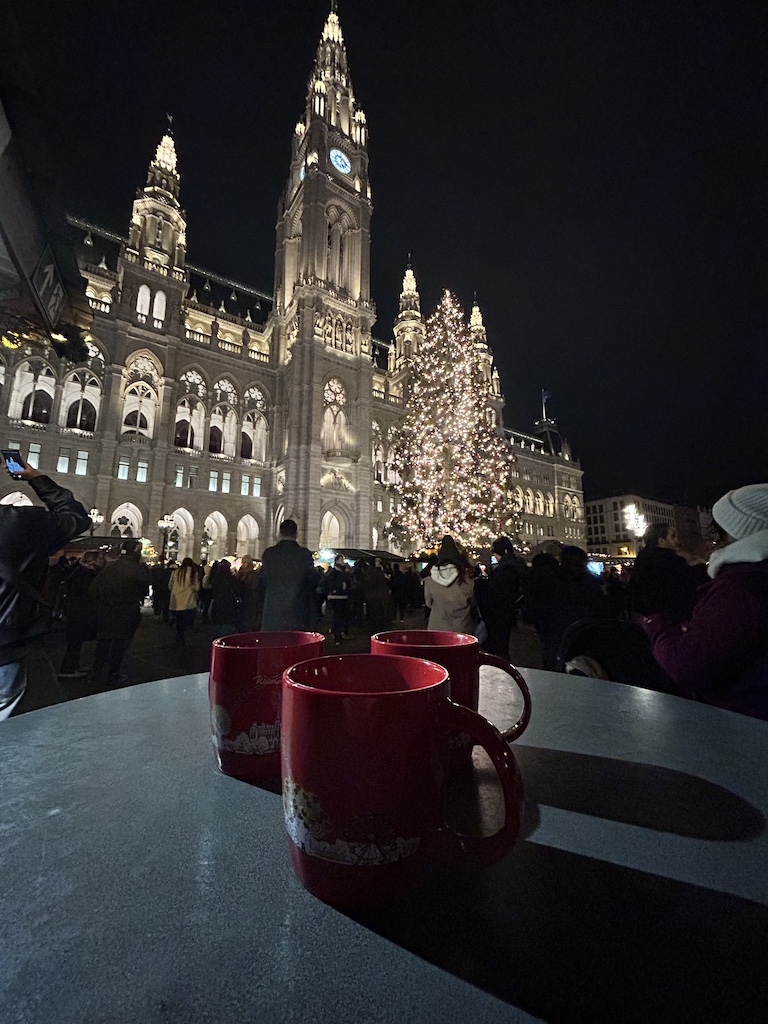
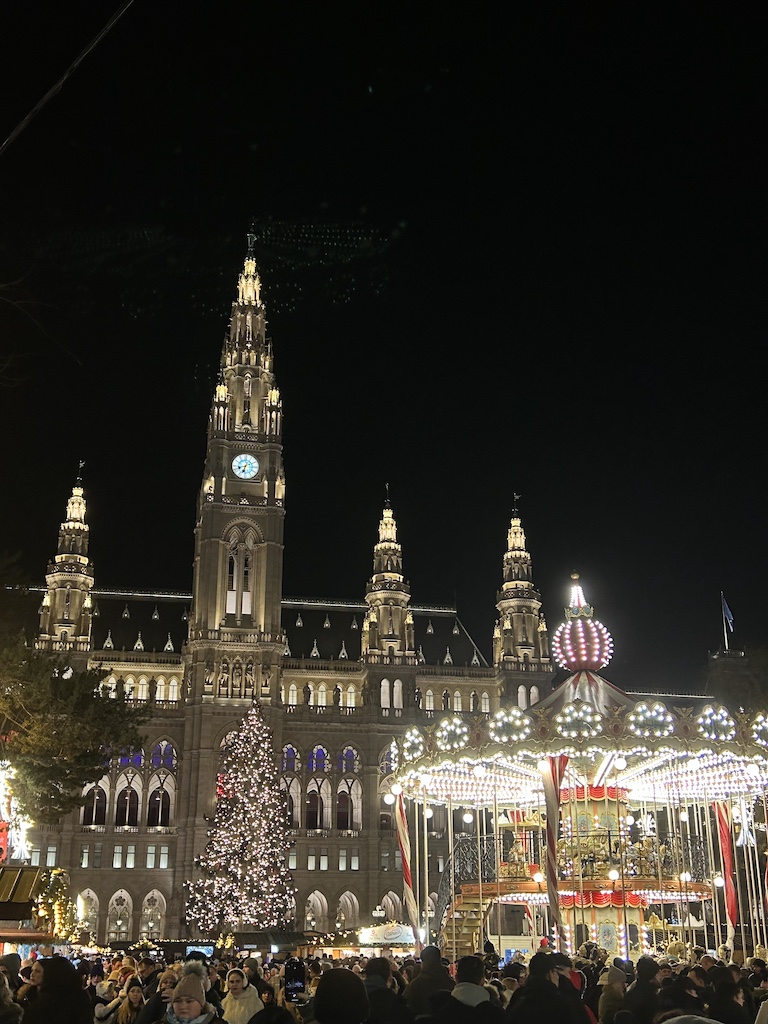
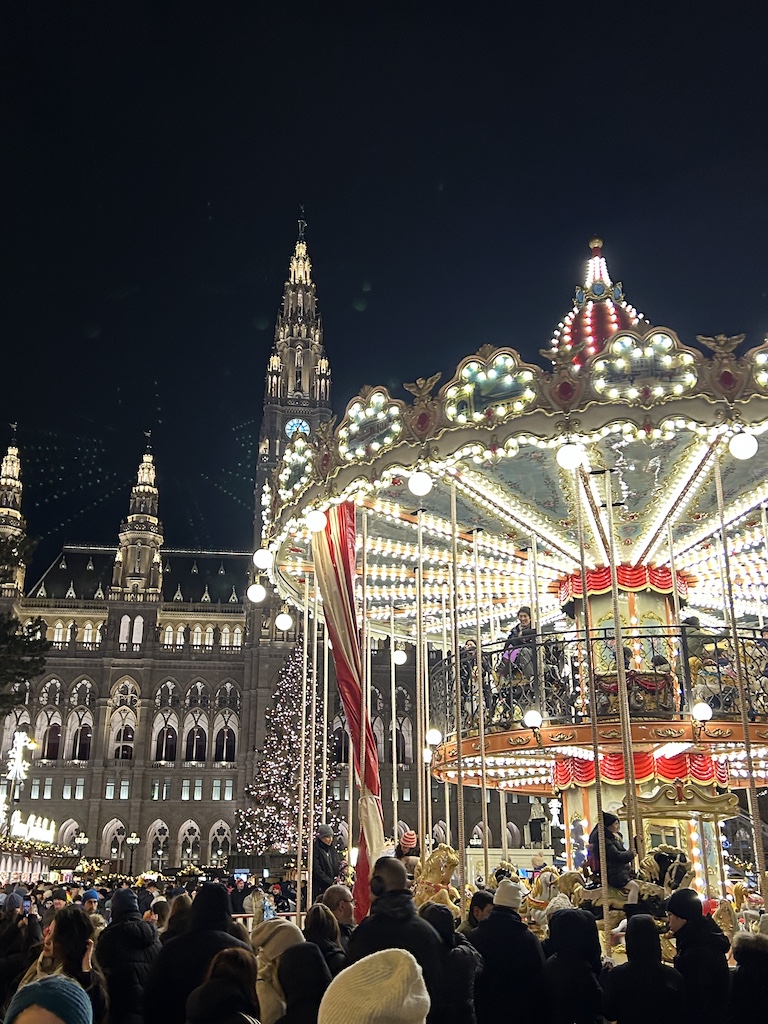
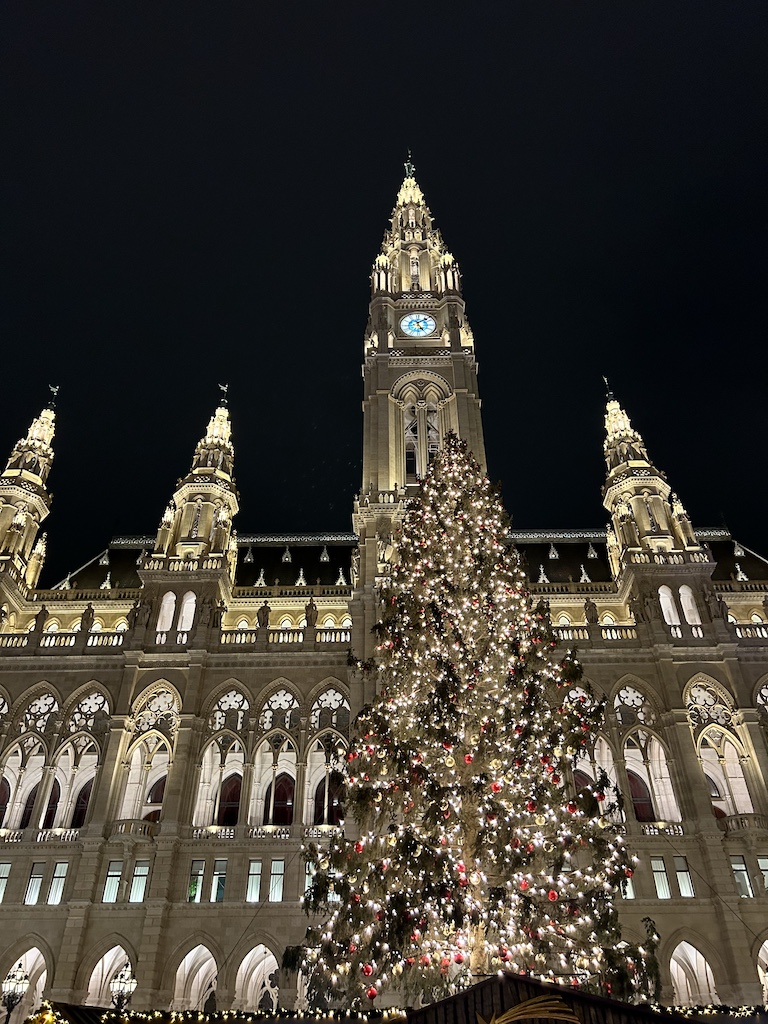
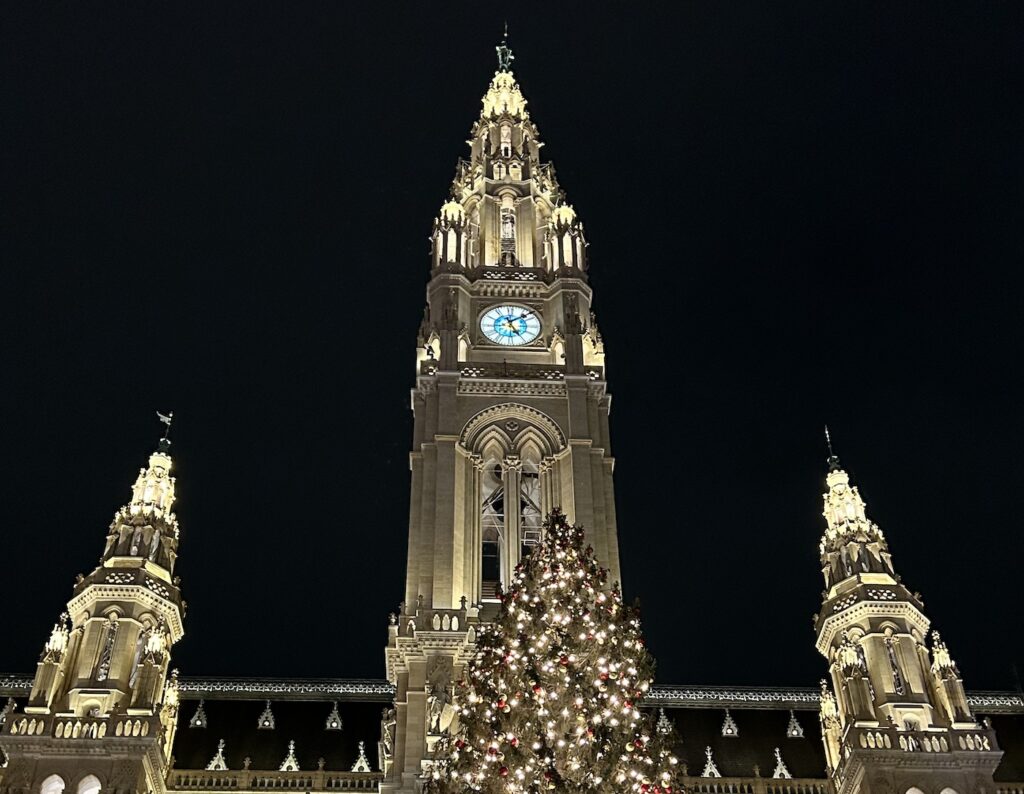
Rathausplatz (Wiener Christkindlmarkt) is Vienna’s largest and most famous market. Its towering Christmas tree dominates the square, and the Wiener Eistraum skating rink winds through the park. Crowds and lights create a magical setting that captures the city’s holiday spirit.
Artisan & Romantic Markets
Karlsplatz
Karlsplatz (Art Advent) is an arts and crafts market, everything is handmade. On weekends increasingly crowded, but still perfect for families. The fountain area is transformed into a straw play zone with small animals, where children can explore and enjoy festive activities. Two tents (yurts) enhance the experience:
– The Star Workshop yurt hosts arts and crafts, including candle-making and drawing.
– The Sky Tent offers storytelling sessions from Thursday to Sunday.
Spittelberg
Spittelberg, nestled in narrow alleys near Neubaugasse, offers a cozy, candlelit atmosphere. Artisan stalls sell unique handmade gifts, and romantic courtyards provide a quieter, intimate market experience. Crowded on weekends.
Schönbrunn Palace
The Christmas markets at Schönbrunn Palace are more tourist-heavy, but magical in the evening when the palace lights up; wide variety of stalls.
Belvedere Palace
These markets are elegant and serene, set against the baroque palace with high-quality crafts and gourmet treats.
Other Notable Markets
Other markets worth exploring include Am Hof; Stephansplatz; Maria-Theresien-Platz, located between the Natural and Art History Museums. If you want to taste the best punch in the city, go to Graben, where the Lions Club serves punch for charity. Try here a typical winter snack, like Schmalzbrot – bread with pork-fat spread.
This year, Maria-Theresien-Platz is closed due to renovations, but Vienna’s many other markets ensure the festive spirit is never far.
Food & Drink Highlights
No visit to Vienna’s Christmas markets is complete without tasting traditional and seasonal specialties:
- Glühwein: warm, spiced red wine
- Punsch: fruity or sweet, sometimes alcohol-free, perfect for young visitors
- Kaiserschmarrn: shredded, fluffy pancake dusted with sugar, often with fruit compote or jam
- Mohnnudeln: soft kind of gnocchi coated in poppy seeds and sugar
- Raclette: melted cheese scraped over bread or potatoes
- Maroni: roasted chestnuts served hot in paper cones
Tips for Visiting
Timing: Markets usually open around 11:00–12:00. Weekdays are quieter.
Dress warmly: Layers, gloves, and a warm hat or head covering are essential.
Cash is useful: Not all stalls take cards.
Reusable mugs: Many markets provide punch in reusable mugs, which can be kept as souvenirs. When you return them to the stall, you get a few Euros back.
Kid-friendly spots: Karlsplatz and Altes AKH (University campus and a former hospital grounds) have play areas, storytelling, and animal encounters.
Wandering from market to market is the best way to feel the rhythm of Vienna in December. Whether it’s the historic elegance of Freyung, the grandeur of Rathausplatz, the intimate charm of Spittelberg, or the regal glow of Schönbrunn, the Christkindlmärkte capture the heart of the city: tradition, craftsmanship, and festive warmth.
Vienna’s Christmas markets are not just places to shop — they are a celebration of light, taste, and shared joy, and they make the city unforgettable during winter.
Visit my PRINT STORE for more beautiful photos from my travels!
