
Planning a road trip through Arctic Norway and Finnish Lapland? Join us on a mother-and-daughter adventure from Ivalo and the Sámi heartlands to Tromsø, Alta, Hammerfest and Nordkapp, where we experienced the Midnight Sun beneath clear Arctic skies. Along the way we discovered spectacular fjords, reindeer roaming freely and the unique culture of Europe’s Indigenous Sámi people. Slow trip and slow reading follow below.
For years, seeing the Midnight Sun had been high on my travel wish list. My daughter felt exactly the same. While the men in our family weren’t particularly enthusiastic about spending their summer holiday in the Arctic, the two of us couldn’t think of a better adventure. Our destination was Nordkapp, but the journey would also take us through the Sámi heartlands of northern Norway and Finnish Lapland, along spectacular fjords, across windswept tundra and into a landscape where the sun never truly sets. From Ivalo and Kautokeino to Tromsø, Alta, Hammerfest and Nordkapp, this was a road trip unlike any other.
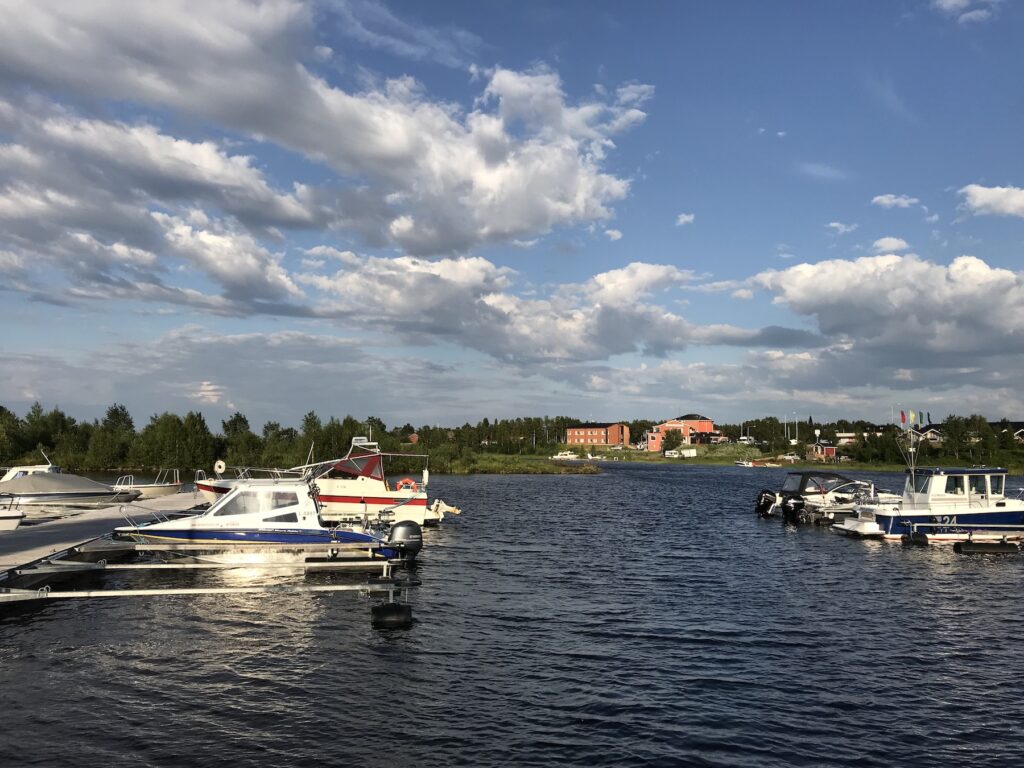
The Midnight Sun is one of nature’s most extraordinary phenomena. During late spring and early summer, the sun remains above the horizon for 24 hours a day in areas north of the Arctic Circle. The farther north you travel, the longer this period lasts. The opposite happens in winter, when the Polar Night brings weeks—or even months—without sunrise.
It is often confused with the Northern Lights, but the two couldn’t be more different. While the Midnight Sun belongs to the endless days of the Arctic summer, the Aurora Borealis dances across the sky during the long, dark nights of winter.
A mother-and-daughter adventure
Our road trip was very much a mother-and-daughter adventure. While my daughter had one goal in mind—reaching seeing the Midnight Sun and reaching the North Cape or Nordkapp, Europe’s northernmost point accessible by road—I wanted to revisit the Arctic, see friends in Finnish Lapland and spend more time getting to know the indigenous Sámi people.
This wasn’t my our journey to the far north, yet I found myself just as captivated as before. There is something about the Arctic that is difficult to describe: the silence, the quality of the light and the vast, open landscapes. By the end of our journey, I realised that, much like the Arctic itself, the people here may seem reserved at first, but beneath the surface they are incredibly warm and welcoming.
Our journey begins in Finnish Lapland
We flew from Vienna to Ivalo via Helsinki, picked up our rental car and stocked up on food before setting off. In the far north, distances are vast and services become increasingly scarce, so it pays to be prepared. Our first stop was nearby Inari, a place I had previously visited in winter, when frozen Lake Inari hosted traditional reindeer races. Seeing it again under the endless daylight of summer felt like discovering an entirely different world. From there, we continued north towards Karigasniemi, close to the Norwegian border, driving through what I consider one of the most beautiful landscapes in Finnish Lapland. The road wound through forests, open tundra and alongside rivers with broad sandy banks, and every now and then we simply had to stop and admire the scenery.
Crossing into Norway was almost imperceptible. Like elsewhere in the far north, national borders seem to exist only on maps. We followed the river northwards until we reached Karasjok, one of the most important cultural centres of the Sámi people and our first overnight stop. Although “overnight” somehow feels like the wrong word when the sun never sets and the nights are nightless.
Meeting the Sámi – the indigenous people of northern Europe
Karasjok is home to one of Norway’s largest Sámi communities, with around 85 per cent of its population belonging to the indigenous people of northern Scandinavia. The following morning, we turned southwest towards Kautokeino, a town I had wanted to visit ever since reading a National Geographic feature about Sámi reindeer herders many years ago. Driving through Finnmark is a pleasure, despite roads that are sometimes surprisingly rough for one of Europe’s wealthiest countries. The scenery is so beautiful that we found ourselves stopping every few kilometres to take photographs or simply enjoy the view.
The Sámi are the indigenous people of northern Europe, living across Norway, Sweden, Finland and Russia’s Kola Peninsula. Traditionally they were hunters, fishermen and gatherers, but reindeer have always been central to their way of life. As the herds migrated between summer and winter grazing grounds, the Sámi followed them, becoming a nomadic people. Today, most Sámi are Christian, many belonging to the conservative Lutheran Laestadian movement. Before Christianity arrived, however, they had their own spiritual beliefs centred on nature. Shamans, known as noaidi, acted as intermediaries between people and the spirit world, using beautifully decorated ceremonial drums during rituals.
Kautokeino – At the Heart of Sámi Culture
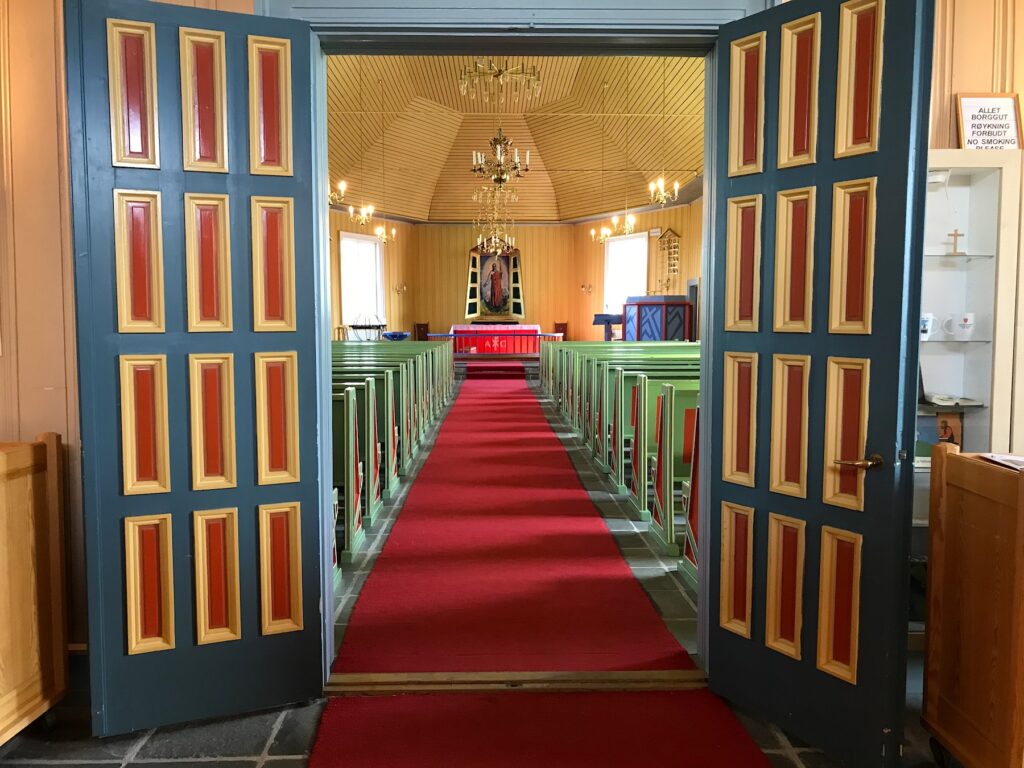
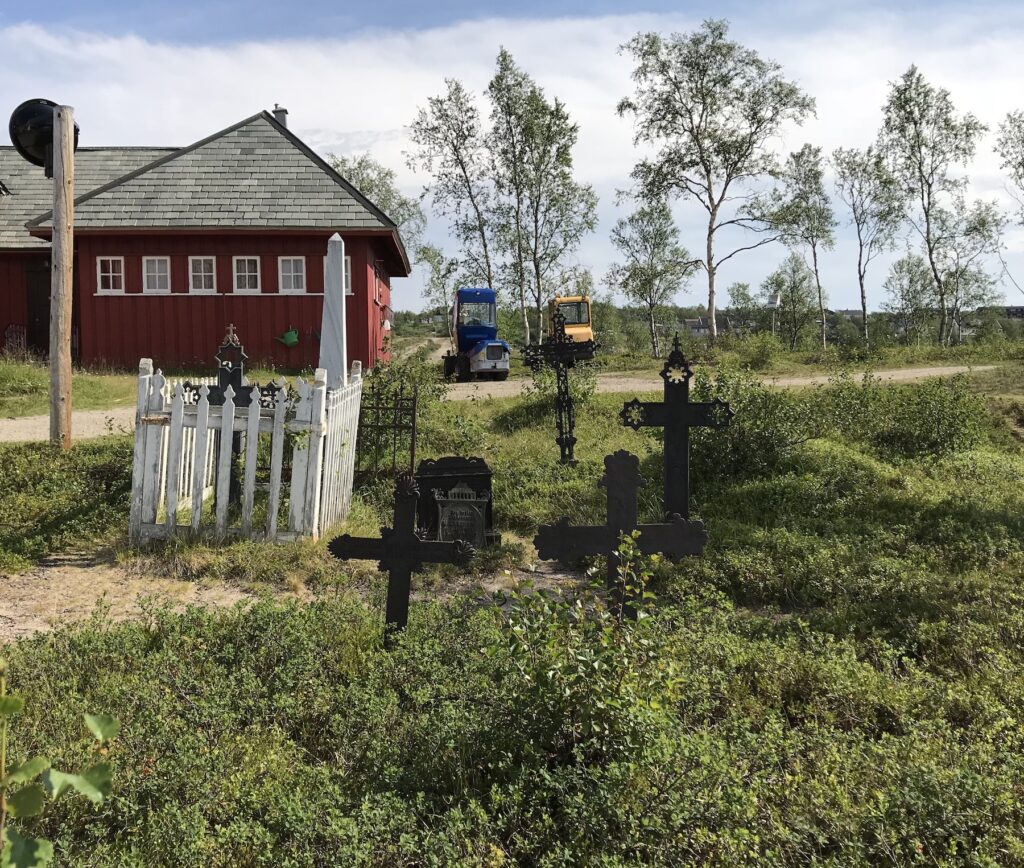
For centuries, Kautokeino has been one of the most important centres of Sámi life. Nomadic reindeer herders traditionally spent their winters here, and even today there are more reindeer than people during the colder months. The town’s first house was built in 1640. Although it was almost completely destroyed during the Second World War, Kautokeino remains a vibrant cultural centre. The colourful interior of its church, typical of Laestadian congregations, perfectly complements the traditional Sámi gákti—bright blue garments trimmed with vivid red and yellow details. There are several regional variations of the costume, each reflecting the wearer’s home area and family heritage.
Leaving Kautokeino, we headed back towards Finland. Before crossing the border, we stopped to fill up the tank. Travelling through the sparsely populated Arctic teaches you one important lesson very quickly: never pass a petrol station without thinking twice. Sometimes the next one is much farther away than you expect.
Coffee by the Litre
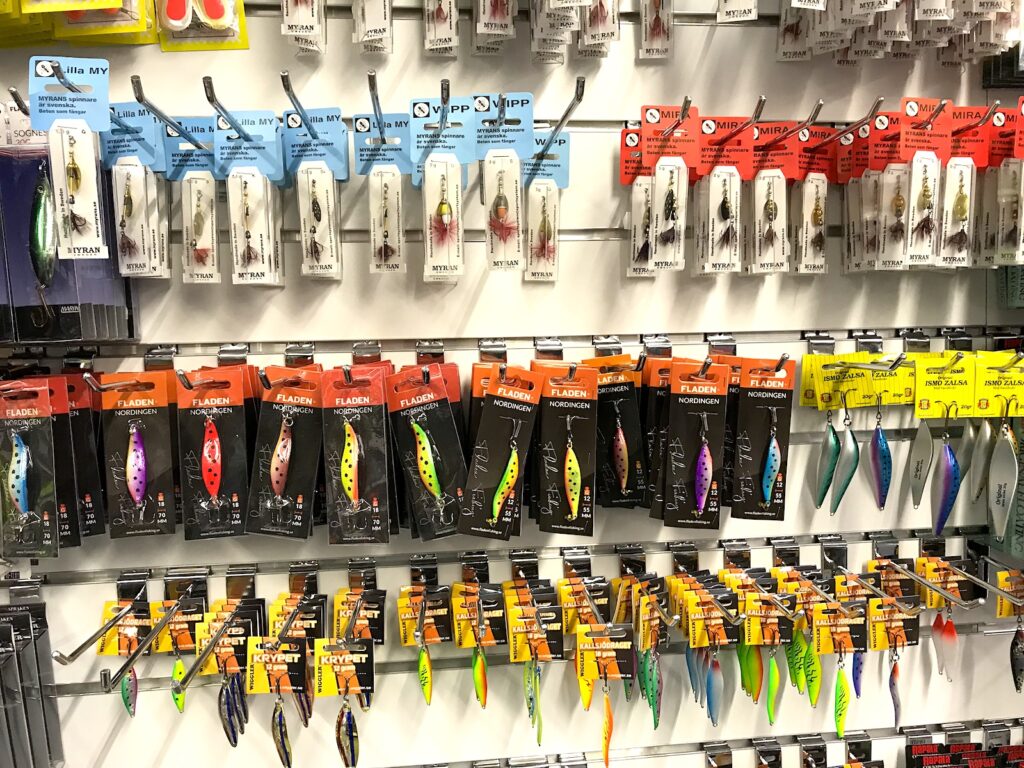
Not far from the Finnish border, we came across a tiny petrol station and decided to fill the tank once again. In the Arctic, you never really know where the next opportunity will be. Calling it a petrol station may be a bit generous. It consisted of two dusty pumps standing out in the open, while payments were made inside a small wooden building that also served as a café and a grocery shop. A group of local fishermen sat outside smoking, while anglers came and went. Fishing season was in full swing, and the whole scene felt like something out of a classic road movie.
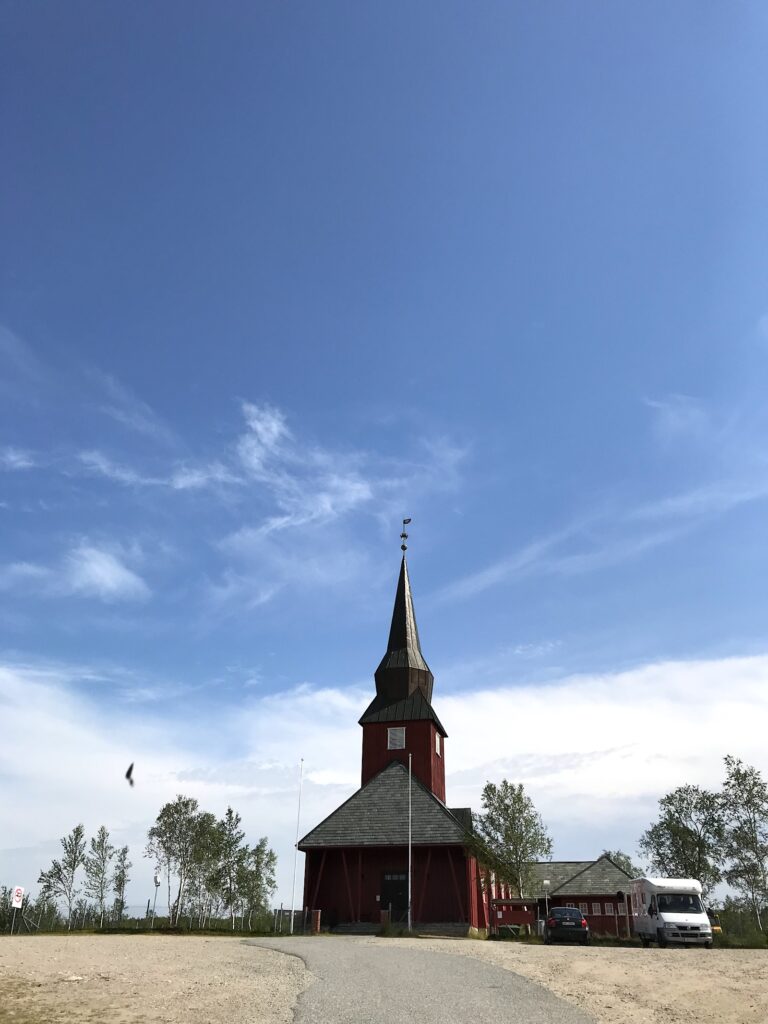
We couldn’t resist stopping for lunch. Coffee here came with unlimited refills—a tempting offer until you tasted it. Quantity definitely won over quality but then again, I am a spoilt espresso drinker. Our plan was to reach Tromsø (Norway) that same day, so we continued through Finland via Hetta before making a short detour into Sweden, crossing the border at Karesuvanto. The small wooden church there looked much like the others from the outside, but its interior was noticeably simpler and less colourful than the churches we had seen in Norway. Soon afterwards we crossed back into Finland and continued towards Kilpisjärvi, where Finland, Sweden and Norway meet. Once again, there were no border controls and barely any indication that we were moving between countries, even though Norway is not a member of the European Union.
Tromsø – The Gateway to the Arctic
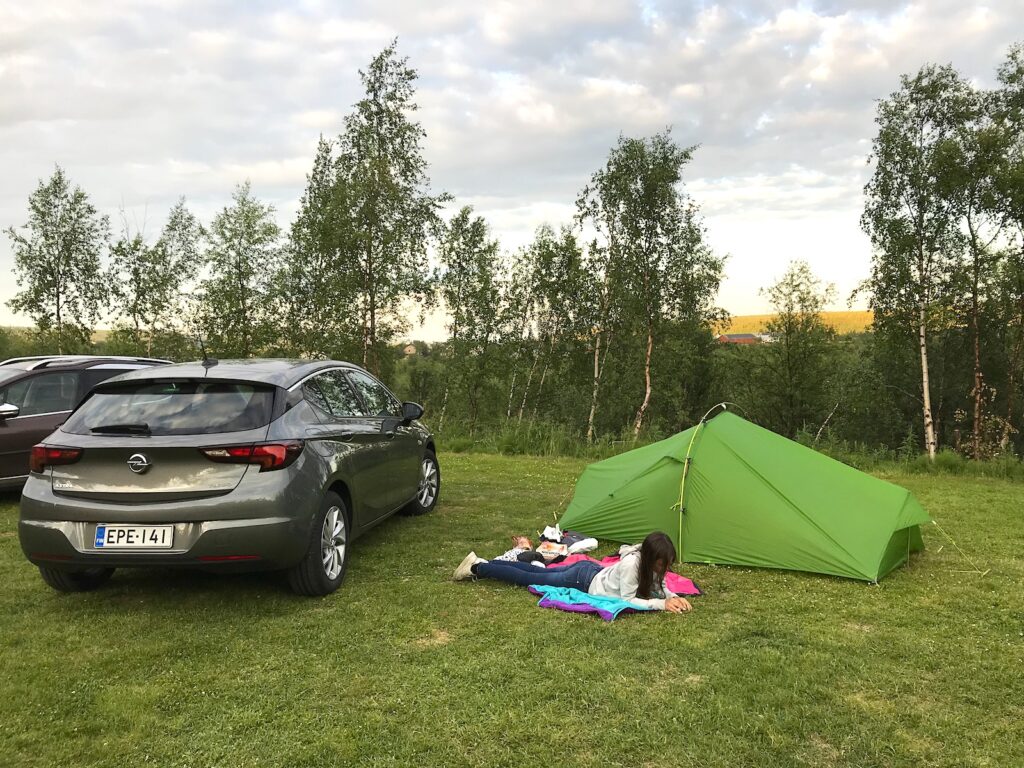
From Kilpisjärvi we drove northwest towards Tromsø on Norway’s spectacular coast. Snow-capped mountains rose in the distance, their white peaks reminding us of the Alps, while the road followed deep blue fjords beneath clear summer skies. The weather changed the moment we reached Tromsø. Rain began to fall, the temperature dropped to around 10°C, and suddenly summer felt a long way away. We checked into a campsite near the striking Arctic Cathedral, whose distinctive triangular shape resembles an iceberg rising above the landscape. Before the rain became heavier, we hurried to pitch our tent beside a small stream. We had come prepared: insulated sleeping mats, warm sleeping bags, woollen blankets and plenty of extra layers. Even in midsummer, Arctic nights—or what passes for night—can be surprisingly cold.
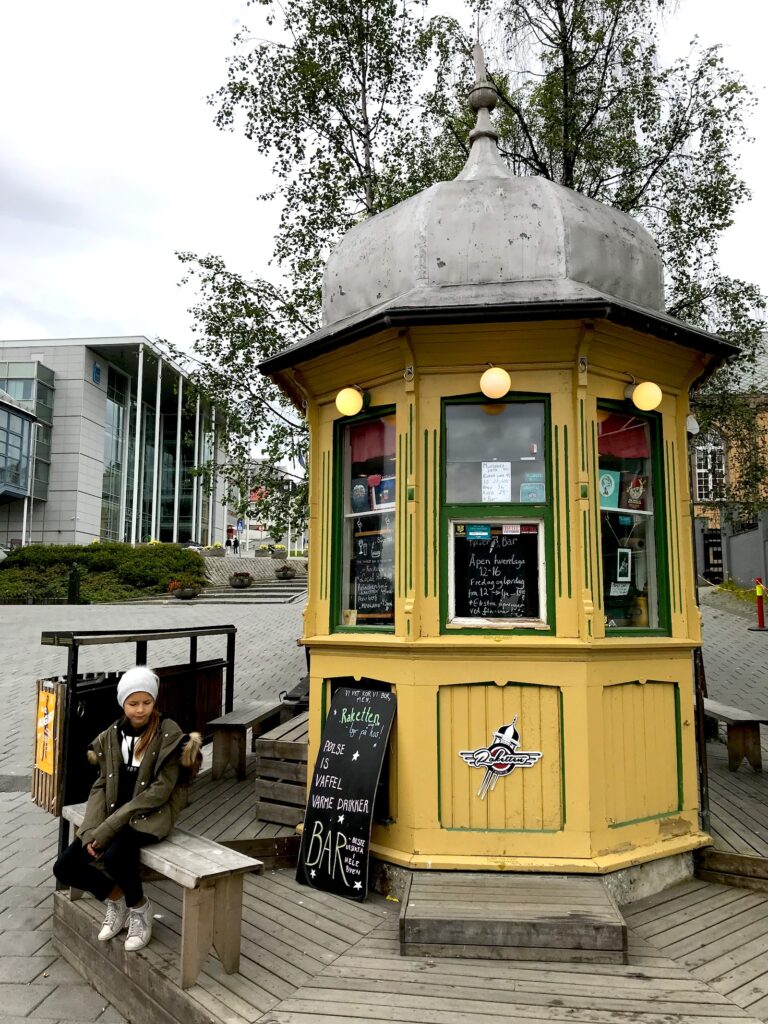
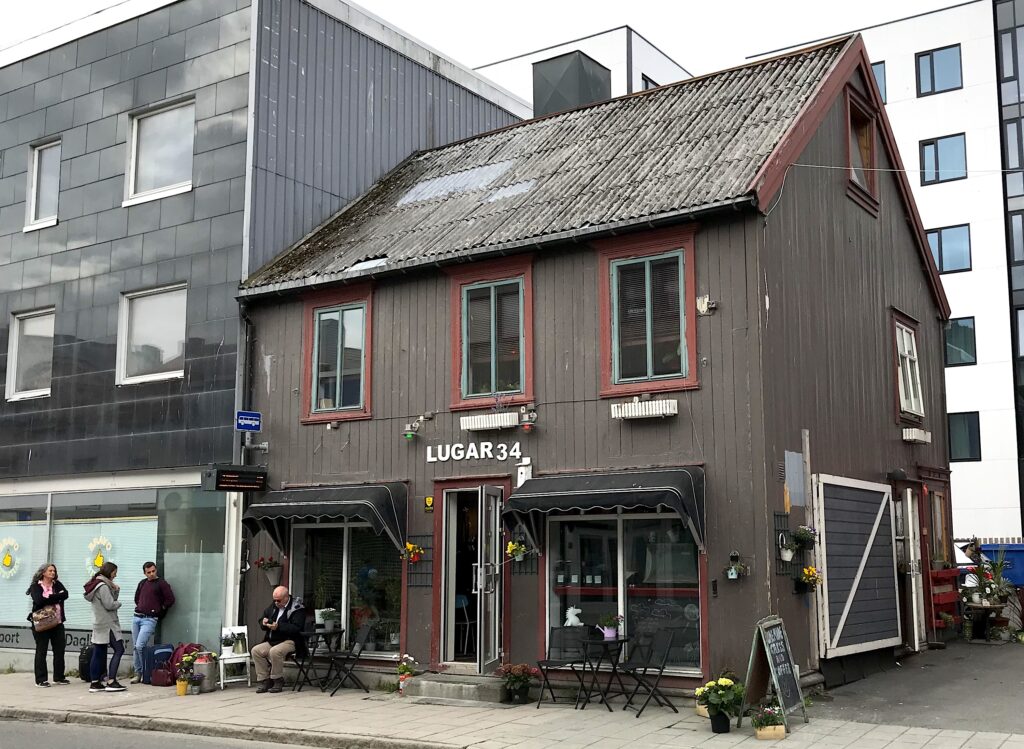
Often called the “Paris of the North”, Tromsø earned its nickname in the nineteenth century because of its lively cultural scene and fashionable residents. After the Second World War it became the largest city north of the Arctic Circle. Unlike many towns in Finnmark, it escaped large-scale wartime destruction, and its colourful wooden houses still line the streets today. Tromsø has also long been known as the Gateway to the Arctic. Many famous polar expeditions departed from here, including those led by Roald Amundsen and Fridtjof Nansen. Today, visitors are more likely to head out in search of whales, joining boat trips into the surrounding fjords. We spent three grey and rainy days in Tromsø before setting off once again. Like every time, we stayed at the hotel too – we chose the one overlooking the port.
Along the Fjords Towards Alta
Rather than taking the quicker route with ferries, we chose to follow the fjords northwards towards Alta. It added several hours to the journey, but in a place where daylight lasts around the clock, there seemed little reason to hurry. The road itself became part of the experience. Our first longer stop was along the Lyngenfjord, where the snow-covered Lyngen Alps rise almost directly from the sea. Layer upon layer of colour unfolded before us: blue sky, white snow, grey mountains, deep blue water and bright green meadows. Further north we stopped again near a glacier at the Kvænang mountain pass before reaching the viewpoint at Kvænangsfjellet Gildetun. From here, hundreds of tiny islands are scattered across the sea below. It is one of those views that leaves you speechless, our eyes stuck to the scene – like hypnotised. Like many visitors before her, my daughter built a small stone cairn before we left. Throughout Scandinavia, these little piles of stones are known as varde and are often said to ensure that one day you will return.
Life Under the Midnight Sun
The Midnight Sun changes your sense of time in surprising ways. At ten o’clock in the evening, the light is much like a summer afternoon elsewhere in Europe. You don’t feel tired when the sun remains high above the horizon, even after hours of driving along winding roads where speed limits rarely exceed 80 km/h. The scenery keeps you awake. So do the reindeer. Every so often one would wander onto the road—or simply stand there, completely unconcerned by approaching traffic—as though reminding us that this was their home and we were merely passing through. Reindeer are one of the main causes of traffic accidents in northern Scandinavia, so driving requires constant attention and a willingness to brake without warning.
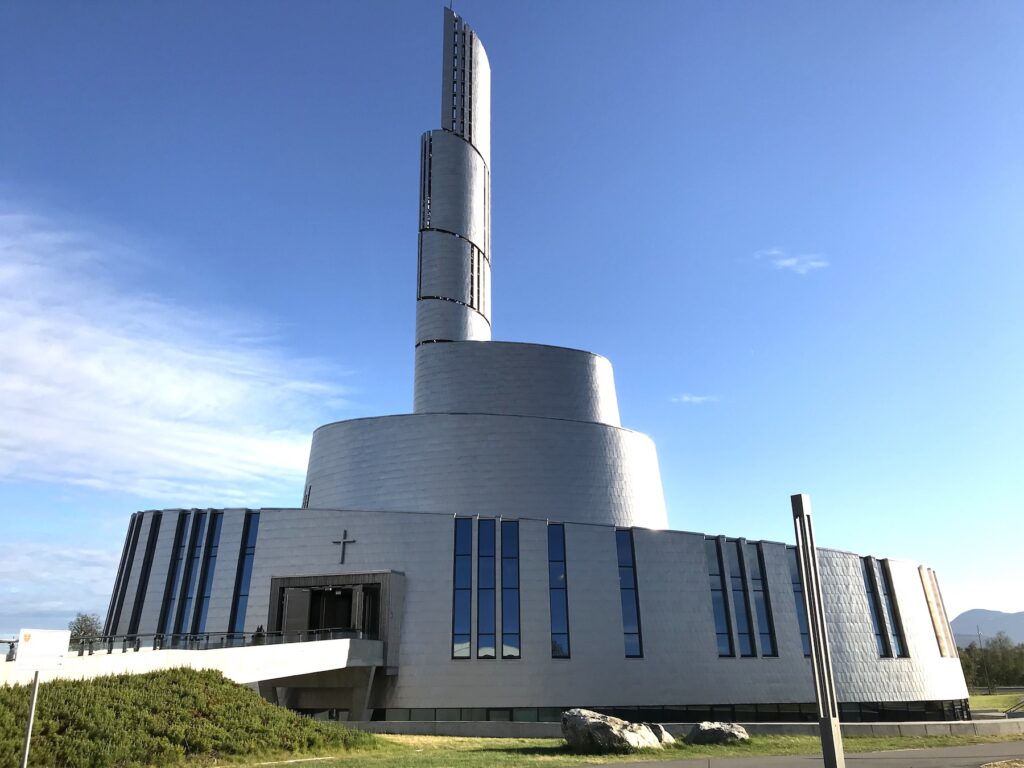
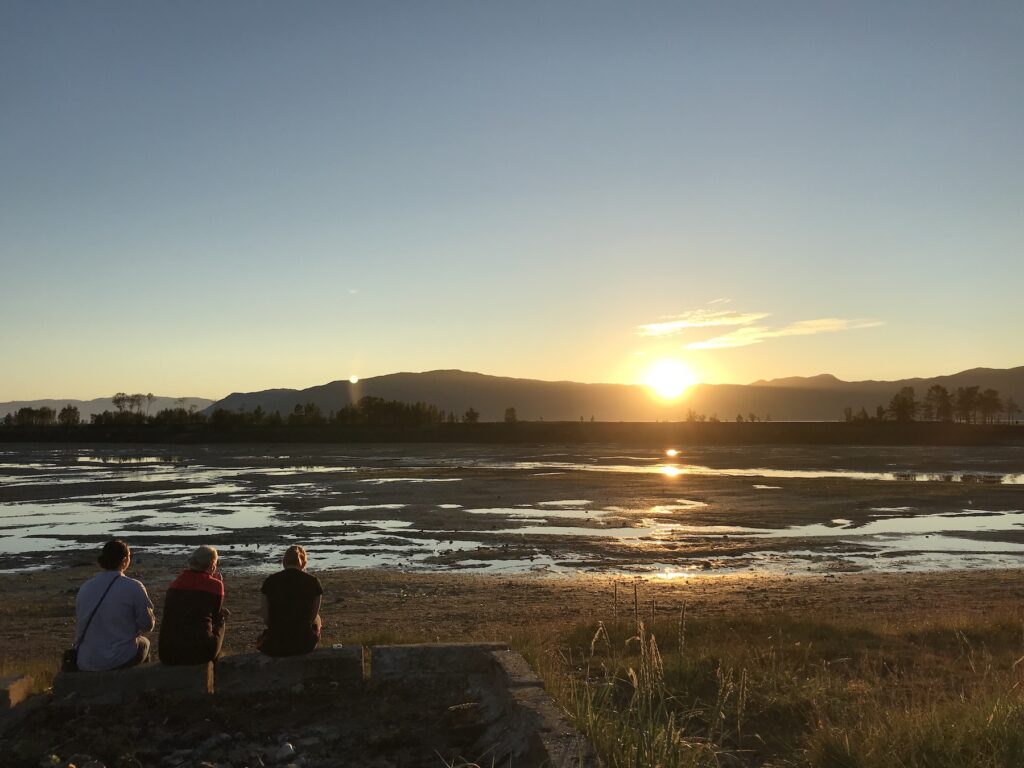
Eventually we arrived in Alta, a town of around 20,000 people at the head of the Altafjord. Often described as one of the oldest continuously inhabited areas in northern Europe, Alta has little historic architecture left. Like so many places in Finnmark, it fell victim to Hitler’s scorched-earth policy during the Second World War, when retreating German forces systematically destroyed towns and villages across northern Norway. One of Alta’s most striking landmarks today is its modern Northern Lights Cathedral, whose spiralling titanium-clad tower dominates the town centre. Just outside Alta lies one of Norway’s most important archaeological sites. The UNESCO-listed rock carvings of Alta include thousands of prehistoric engravings depicting hunters, fishermen, boats, reindeer and bears. Some date back almost 6,000 years, making them among the oldest traces of human life in the far north. That evening we found a campsite beside a fjord where the tide was so low that the water had almost disappeared.
The weather had finally improved. The sun was still shining high above us, the campsite was full of life, and for the first time on the journey we decided to stay awake until midnight to experience the Midnight Sun properly. After all, this was what we had come for.

Hammerfest – One of the World’s Northernmost Towns
Our next stop was Hammerfest, one of the northernmost towns in the world and one of the northernmost urban settlements in Europe. By the time we arrived, the clouds had finally lifted and the sun was shining warmly enough for short sleeves. Quite unexpectedly, the waterfront was buzzing with a local food festival. Stalls lined the harbour, people lingered over seafood and local delicacies, and for a moment the atmosphere felt surprisingly Mediterranean. When the festival isn’t in town, visitors can still enjoy everything from traditional Sámi dishes served in a lavvu (a traditional Sámi tent) to fresh seafood and excellent sushi.
Although Hammerfest is one of Norway’s oldest towns, very little of its historic architecture has survived. Over the centuries it has endured devastating fires, violent storms and, finally, the destruction of the Second World War. In 1945, retreating German forces ordered that no building should be left standing. Almost the entire town was burned to the ground, forcing residents to flee or hide in caves in the surrounding hills. Hammerfest is also home to the Royal and Ancient Polar Bear Society, founded in 1963. Housed inside the Town Hall, it celebrates the town’s long Arctic history through exhibits on hunting, fishing and polar exploration. Membership can only be obtained by visiting Hammerfest in person.
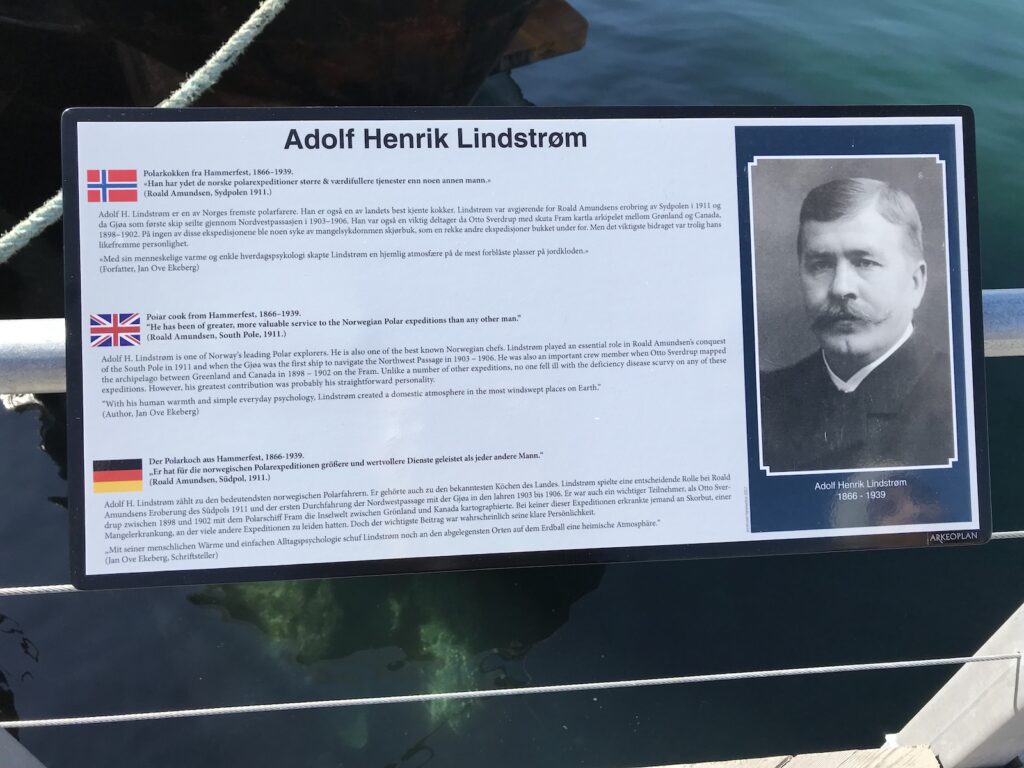
One monument particularly caught my attention. It honours Adolf Henrik Lindstrøm, the cook who joined several of Norway’s greatest polar expeditions, including those led by Fridtjof Nansen and Roald Amundsen. It is probably one of the very few places in the world where a chef is remembered as a national hero.
Life in this Arctic town is undoubtedly demanding, yet the people we met were remarkably relaxed and welcoming. Thanks to the Gulf Stream, the harbour remains ice-free throughout the winter despite its northern latitude.
Towards Nordkapp… continues in the Part II
Leaving Hammerfest, we continued north towards Magerøya, the island that is home to Nordkapp.
The landscape gradually changed. Trees became increasingly scarce, replaced by low Arctic vegetation that formed a bright green carpet stretching across the tundra. Against the deep blue sky, the colours looked almost unreal….
